
Menu
Follow the festival Facebook (new window) Instagram (new window) LinkedIn (new window) TikTok (new window)
What if I don't understand anything? Will I feel like I belong? Am I dressed correctly?
Faced with these questions that we have all asked ourselves, the Festival works to make performing arts accessible to all. The "Fisrt time" project was born out of the desire to answer these questions, to respond to a desire to feel at home or to make coming to a performance more comfortable.
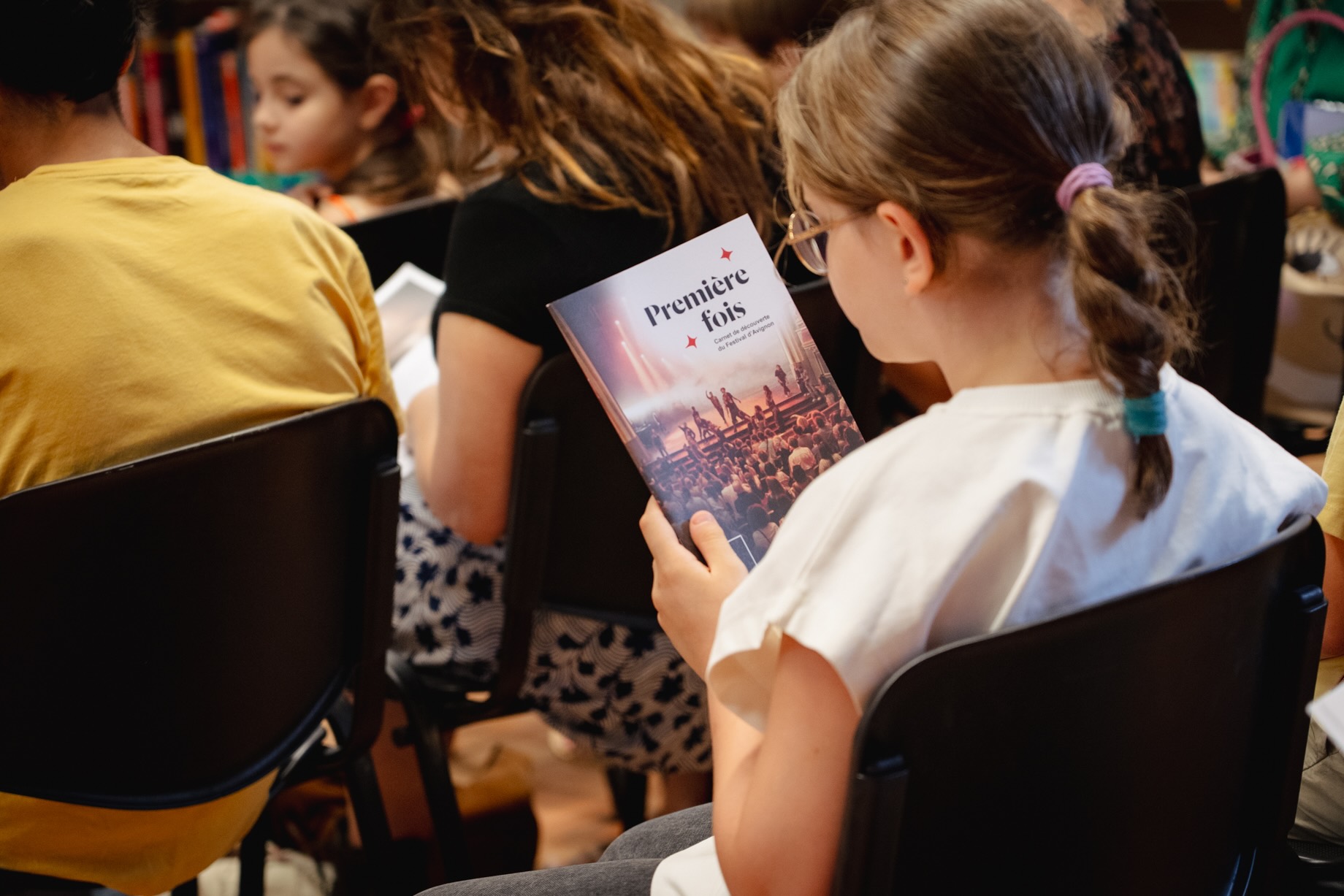
Coming to the Festival d'Avignon for the first time is an experience you will remember for a long time, a unique adventure that can be enjoyed at any age and is open to everyone. The Festival d'Avignon pays particular attention to first-time visitors, accompanying them in their questions, doubts and desires, in an approach that encourages curiosity, discovery and openness to the world around us.
In connection with the artistic and cultural education programmes, the aim is to introduce the performing arts through workshops, a presentation of the programme, guided tours and access to the Festival's shows.
The Festival works on numerous projects that very often involve a first time for the audiences taking part.
A few examples: the À la jeunesse les micros project, the J'y suis j'en suis project (new window) or the digital project with Avenir 84. All the projects can be found on the page actions. (new window)
Accompanied by our "first-time" mediators, we offer you a number of opportunities to put together your own itinerary. Here is a non-exhaustive list:
Behind-the-scenes visits to a Festival venue
Pre-show workshops
Sharing your feelings about the show
Workshop on the Festival archives at the BnF (themed workshop possible depending on the year's themes)
Scavenger hunt around Christophe Raynaud de Lage's show photos at La FabricA
Meeting with Festival teams
Meet the artists at the Café des idées
Attend a live radio broadcast/recording
You can also add these events to your show bookings:
A guided tour of the history of the Festival with Clément Demontis
A screening of a Territoires Cinématographiques film at Utopia
A visit to an exhibition at the Maison Jean Vilar
Public Relations Department
Download
The Festival d’Avignon is a great celebration that showcases performances from all around the world. It is present in the city all year round, offering workshops, encounters and performances for the people of Avignon. In July, it opens up to the world: the streets come alive, artists share their creations, and Avignon moves to the rhythm of the performing arts.
This booklet helps you discover the Festival d’Avignon: its history, its venues, its values, and its performances. It invites you to experience the Festival at your own pace and to feel free and in your place. It also opens the doors to La FabricA, the Festival’s permanent venue.
Spectators coming to the Festival d’Avignon for the first time have rights, just like those who return year after year. Like all rights, they must be exercised so as not to be lost. The list below is not complete, you can invent new ones by adding the rights that seem important to you.
The following list is by no means complete — it is always a work in progress.
The right not to know the artists of the performance you are about to see
The right to laugh and/or cry during the performance
The right to be bored and even to fall asleep (without snoring!)
The right to imagine that the play was made especially for you
The right to have doubts and questions during and after the play
The right to applaud at the end, in your own rhythm
The right to leave before the end (even if sometimes it’s only at the end that we discover we love a play)
The right not to like the play (even when most of the audience does)
The right not to know whether you liked the play or not, and not feel obliged to decide
The right to love the play and come back to see it a second time
Tiago Rodrigues, inspired by Daniel Pennac, “The Inalienable Rights of the Reader” from Comme un roman, Paris, Gallimard, “Folio” collection, 1992.
Download
