
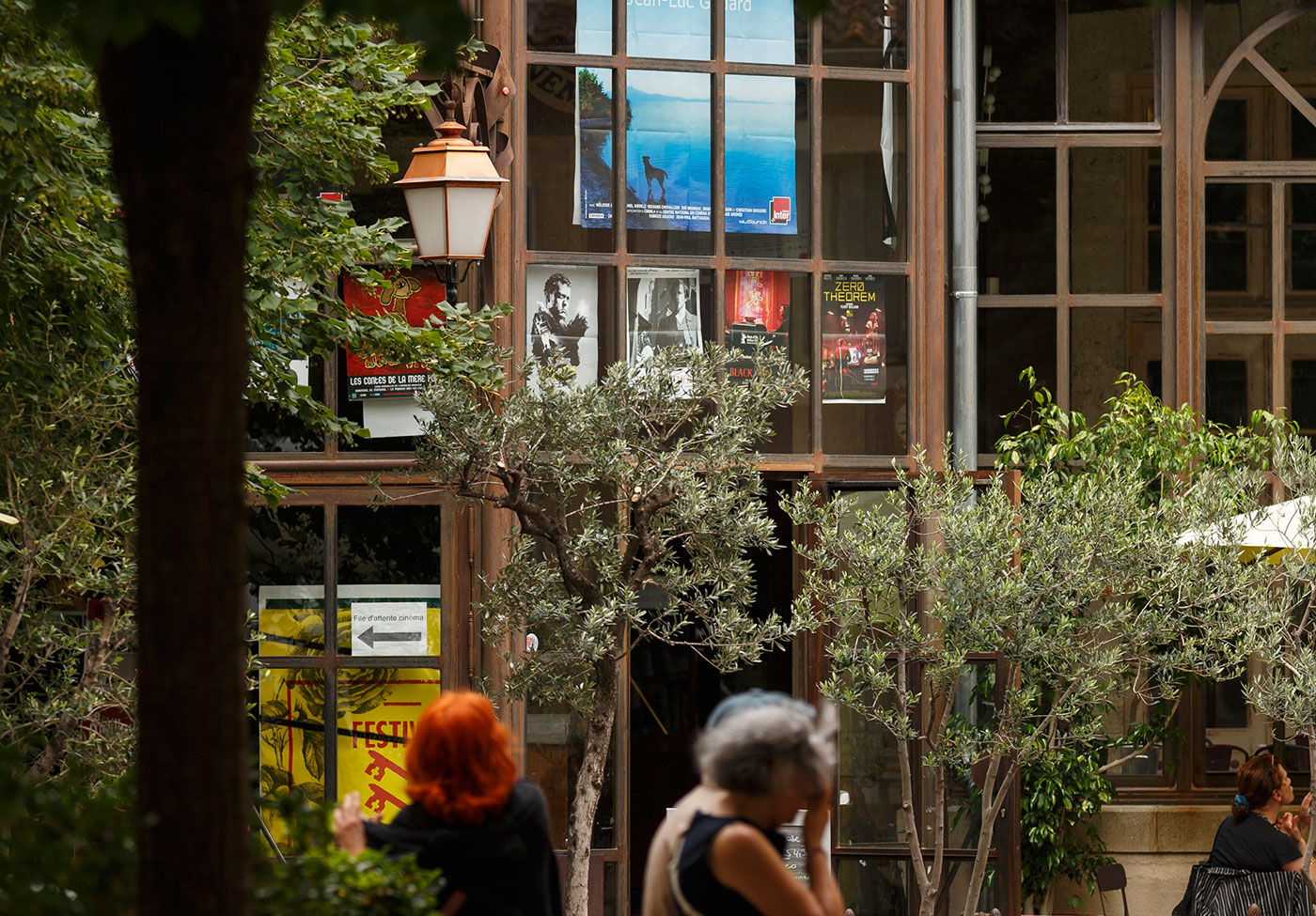
Cinematographic Territories

Cinematographic Territories of the Festival d'Avignon © DR

Cinematographic Territories

From 4 July to 25 July 2026 at the Cinemas Utopia of Avignon

The Cinematographic Territories create a dialogue between live theatre and cinema, in collaboration with the Utopia cinemas in Avignon. Each day, film screenings are followed by discussions where audiences have the chance to meet and engage with artists, choreographers, filmmakers, activists, critics, and journalists invited to the Festival d’Avignon. These moments represents an opportunity to expand our perspective on the themes explored on stage, to discover films from diverse cultures, and to connect with parallel events such as the Café des idées.

The screenings will be conducted by several key moments: the "Territoires de la langue" will highlight films resonating with the invited language of the year : Korean. The "Ciné-meetings" will offer the opportunity to exchange with artists of the programme following the screenings. Marion Siéfert and Matthieu Bareyre will present their film club “In Da Bunker”, whilst Lee Jaram, Wagner Moura, Tiphaine Raffier, Amir Reza Koohestani and other artists will also present their film selections.

In Resonance with the plays

From stage to screen: films that creates an echo with the Festival play's and carry their stories further.

  • Wagner Moura, actor in Un procès – après l’ennemi du peuple and winner of the Best Actor Award at the 2025 Cannes Film Festival and the 2026 Golden Globe for Best Actor for The Secret Agent by Kleber Mendonça Filho, will present a film that extends the political themes of the show onto the big screen, followed by a discussion with the audience.

  • Tiphaine Raffier will continue to explore the themes of her show L’Hors-présence through a discussion centred on Mike Flanagan’s film Life of Chuck.

  • Daria Deflorian will explore the questions raised by Che dolore terribile è l’amore through the screening of Viaggio a Jeju, a short film made from footage shot during the trip to Jeju for the creation of the show by Andrea Pizzalis and Nikolai Palmieri, as well as Siamo qui per provare by Jacopo Quadri and Greta De Lazzaris, followed by a discussion.

  • Katerina Andréou will present a film in dialogue with her show How Romantic, inviting the audience to discover the many facets of her artistic world.

  • Jaram Lee will present The World of Love as an echo of his show Snow, snow, snow, creating a dialogue between stage and screen, between performance and image.

  • Amir Reza Koohestani will present a selection of films as an extension of his reading of Aeschylus’ The Persians, as part of his participation in Souffle d’Avignon.

  • In the festival’s final week, Marion Siéfert and Matthieu Bareyre will open the doors to their film club ‘In Da Bunker’: an opportunity to discover films that resonate with Bunker’s creative vision.

Focus on the invited language

Every morning at 11am, a selection of films from South Korea explores forms of resistance, social struggles, and cultural identities. Several major thematic threads emerge:

The exploration of social divides with Parasite by Bong Joon-ho and Broker (Les Bonnes étoiles) by Hirokazu Kore-eda; the family as the epicenter of tension with A Normal Family by Hur Jin-ho and Minari by Lee Isaac Chung (presented by Jaha Koo); the critique of institutions with Memories of Murder by Bong Joon-ho (presented by Julien Gosselin) and About Kim Sohee by July Jung; and finally, characters on the margins or in search of identity, notably in Winter in Sokcho (Hiver à Sokcho) by Koya Kamura.

This year, two special screenings at 9pm venture into the realms of fantasy and fear with Train to Busan (Dernier train pour Busan) by Yeon Sang-ho and The Host by Bong Joon-ho—two iconic works of South Korean genre cinema.

Cinema for young viewers

Every morning at 10:30am, screenings are specially curated for young viewers. Created as an educational and artistic extension of the Festival, these sessions invite children to discover childhood stories and cultures through the lens of the Korean language. They offer a sensitive and enriching journey into other worlds, where timeless works like Jiburo and Approved for Adoption (Couleur de peau : miel) mingle with more recent creations such as Piro Piro, Mother Land (Krisha et le Maître de la forêt), and Underdog (Nous, les chiens).