
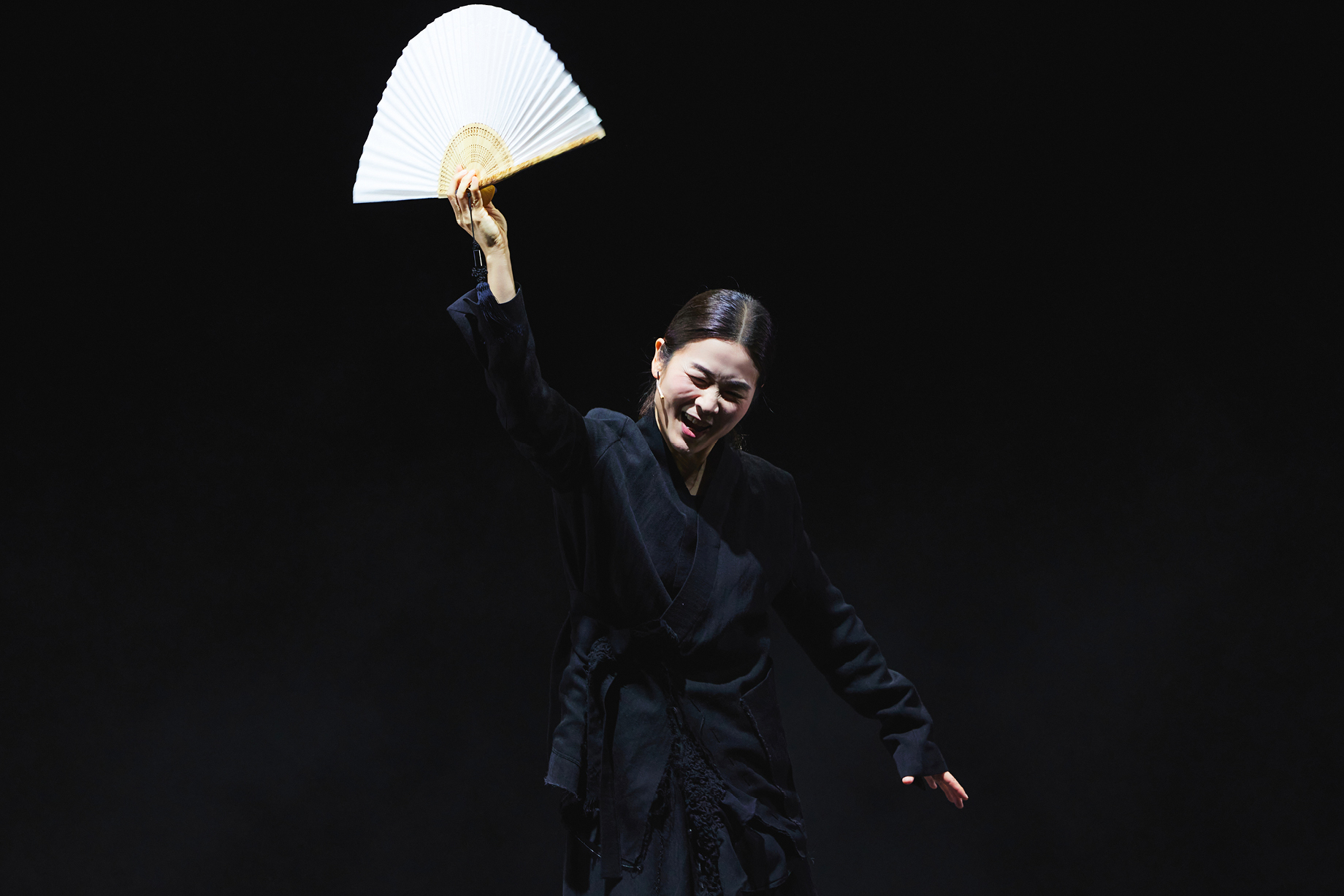
Korean is the guest language of this 80th Festival d’Avignon. After English, Spanish, and Arabic, Korean invites us on a journey to the other end of the world. At once a local and global language, it is written using an alphabet—hangeul—whose origins date back to the 16th century, when King Sejong the Great ordered the creation of the Hunminjeongeum (훈민정음), or “the Correct Sounds for the Instruction of the People”, with the goal of fighting illiteracy. It is therefore a language that carries within itself an attempt at democratising knowledge. Korean is a gateway to a culture, that of the Republic of Korea, which, for a few years now, has enjoyed international recognition through its literature, its cinema, its TV series (K-drama), its music (K-pop), and its cuisine.
It is this cultural diversity that the 80th Festival d’Avignon wants to showcase, inviting its audience, through the performing arts, to discover other, more intimate aspects of Korean culture. Theatre and dance will have a strong representation, in direct connection with the political issues that are currently shaping South Korean society. Traditional forms of arts such as pansori (판소리) and nongak (농악) will also be featured, reinterpreted through the perspective of contemporary artists.
From the Korean peninsula, Korean language and culture unfold at the crossroads of traditions and influences, including from the West. Twenty-five years after the last time a Korean artist was featured in Avignon, the invitation of this language responds to a desire for discovery.